
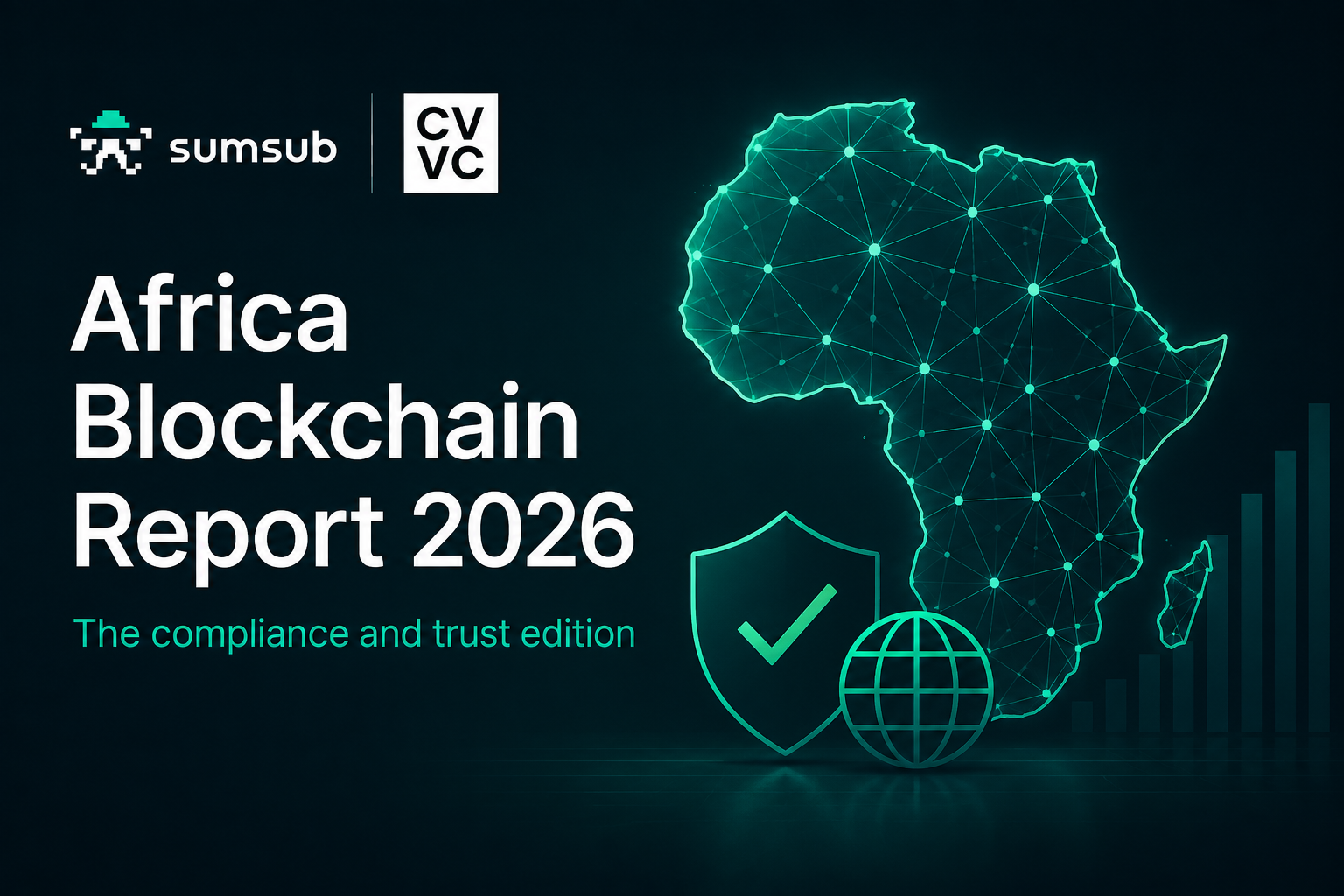
Africa’s blockchain industry continued to attract investor interest in 2025, but the nature of that investment is changing. According to the Africa Blockchain Report 2026 by CV VC and Sumsub, the continent is generating a growing share of global blockchain deals, yet attracting a declining share of global capital. The report argues that the gap is no longer driven by innovation, but by investor expectations around compliance, trust, and institutional readiness.
Rather than chasing speculative blockchain projects, investors are increasingly backing businesses solving practical financial challenges. Cross-border payments, remittances, stablecoin infrastructure, tokenized assets, and digital lending dominated investment activity, reflecting Africa’s growing focus on real-world financial infrastructure.
African Blockchain Capital Is Holding Up—But Large Rounds Are Missing
African blockchain ventures raised US$90.1 million across 28 deals in 2025, representing a 26.6% decline in funding from the previous year. However, deal activity remained relatively resilient, falling only from 30 to 28 transactions.
Globally, the trend was very different. Worldwide blockchain funding increased to US$15.4 billion, while the number of deals fell sharply by 32.1%, indicating that investors concentrated larger amounts of capital into fewer companies. Africa, by contrast, continued producing new investment opportunities but struggled to secure the larger growth-stage rounds.
The report notes that the biggest funding gap occurred in deals above US$25 million, while seed-stage activity remained strong. Seed investments accounted for 45.8% of disclosed capital across 13 deals, suggesting investor confidence remains strongest at the earliest stages of company development.
Utility Continues to Drive Investment
The report highlights that blockchain in Africa is increasingly viewed as financial infrastructure rather than speculation.
Blockchain attracted 5.3% of all venture funding raised in Africa, compared to a 3.0% global average. Every dollar invested during 2025 went into application-layer businesses rather than blockchain protocols themselves.
The largest share of funding went to:
- 67.9% (US$61.2 million) for Centralized Blockchain Services across 19 deals, including payments, remittances, stablecoin banking, crypto payment rails and digital asset lending.
- 23.1% (US$20.8 million) for Decentralized Finance, particularly businesses focused on tokenizing real-world assets.
- 57.2% of deployed capital flowed into companies operating across multiple African jurisdictions.
The report also notes that the top five funding rounds accounted for 58.3% of all African blockchain investment during 2025, highlighting continued concentration of capital around a small number of high-growth companies.
Regulation Is Becoming a Competitive Advantage
One of the report’s strongest themes is that regulatory progress is changing how investors evaluate African blockchain businesses.
By 2026:
- 15 African jurisdictions had fully legalized digital assets, up from 7 in 2024.
- 31 countries remain in uncertain regulatory environments.
- Only 3 countries continue to prohibit digital assets outright.
The report also highlights that Kenya and Ghana enacted comprehensive VASP legislation in late 2025, while Nigeria and South Africa exited the FATF greylist during the same year, signalling stronger regulatory maturity across key African markets.
Fraud Is Raising the Cost of Growth
As blockchain businesses scale, compliance challenges are becoming increasingly complex.
The report states that:
- Multi-market deepfake incidents increased sevenfold over a recent two-quarter period.
- Stablecoins accounted for 84% of global illicit virtual asset transaction volume in 2025.
According to the report, fragmented compliance systems, manual verification processes and differing regulatory requirements across jurisdictions are becoming barriers to raising institutional capital. Compliance is no longer viewed simply as a regulatory obligation but increasingly as a prerequisite for attracting larger investment rounds.
Compliance Is Becoming Core Infrastructure
The report argues that institutional investors increasingly expect compliance systems to be embedded into blockchain businesses from the outset.
It highlights capabilities such as automated identity verification, transaction monitoring, fraud detection, sanctions screening and Travel Rule compliance as critical infrastructure for companies seeking to scale internationally. The report positions automated compliance as essential for managing onboarding, transaction monitoring and cross-border regulatory obligations at institutional scale.
Where Capital Is Flowing
The report identifies payments and stablecoin-enabled financial services as the strongest investment themes.
Its largest disclosed investment was Kredete, which raised US$22 million. The company combines stablecoin-powered remittances with credit-building services for African migrants sending money across more than 30 African countries, serving over 700,000 users. The report presents businesses like Kredete as examples of sectors where compliance requirements are naturally highest because they combine regulated financial activity with cross-border transactions.
Key Statistics
| Metric | Figure |
|---|---|
| African blockchain funding (2025) | US$90.1 million |
| Total investment deals | 28 |
| Funding change vs. 2024 | -26.6% |
| Share of global blockchain deals | 2.81% (record) |
| Blockchain share of African venture funding | 5.3% |
| Global average blockchain venture share | 3.0% |
| Seed-stage share of disclosed capital | 45.8% |
| Centralized blockchain services funding | US$61.2 million (67.9%) |
| DeFi funding | US$20.8 million (23.1%) |
| Pan-African operators’ share of deployed capital | 57.2% |
| Top five deals’ share of funding | 58.3% |
| African jurisdictions with legal digital asset frameworks | 15 |
| Countries with uncertain regulation | 31 |
| Countries maintaining outright bans | 3 |
| Stablecoin share of illicit virtual asset transaction volume | 84% |
| Largest disclosed funding round | Kredete – US$22 million |
Conclusion
The report concludes that Africa is not facing an innovation problem but a trust and scalability challenge. Venture activity remains resilient and blockchain adoption continues to focus on practical financial infrastructure such as payments, remittances and stablecoins. However, attracting larger pools of global capital increasingly depends on demonstrating strong compliance capabilities, fraud prevention, regulatory readiness and operational trust. According to the report, these qualities are becoming as important to investors as the technology itself.
Read the full report >>> Africa Blockchain Report 2026