
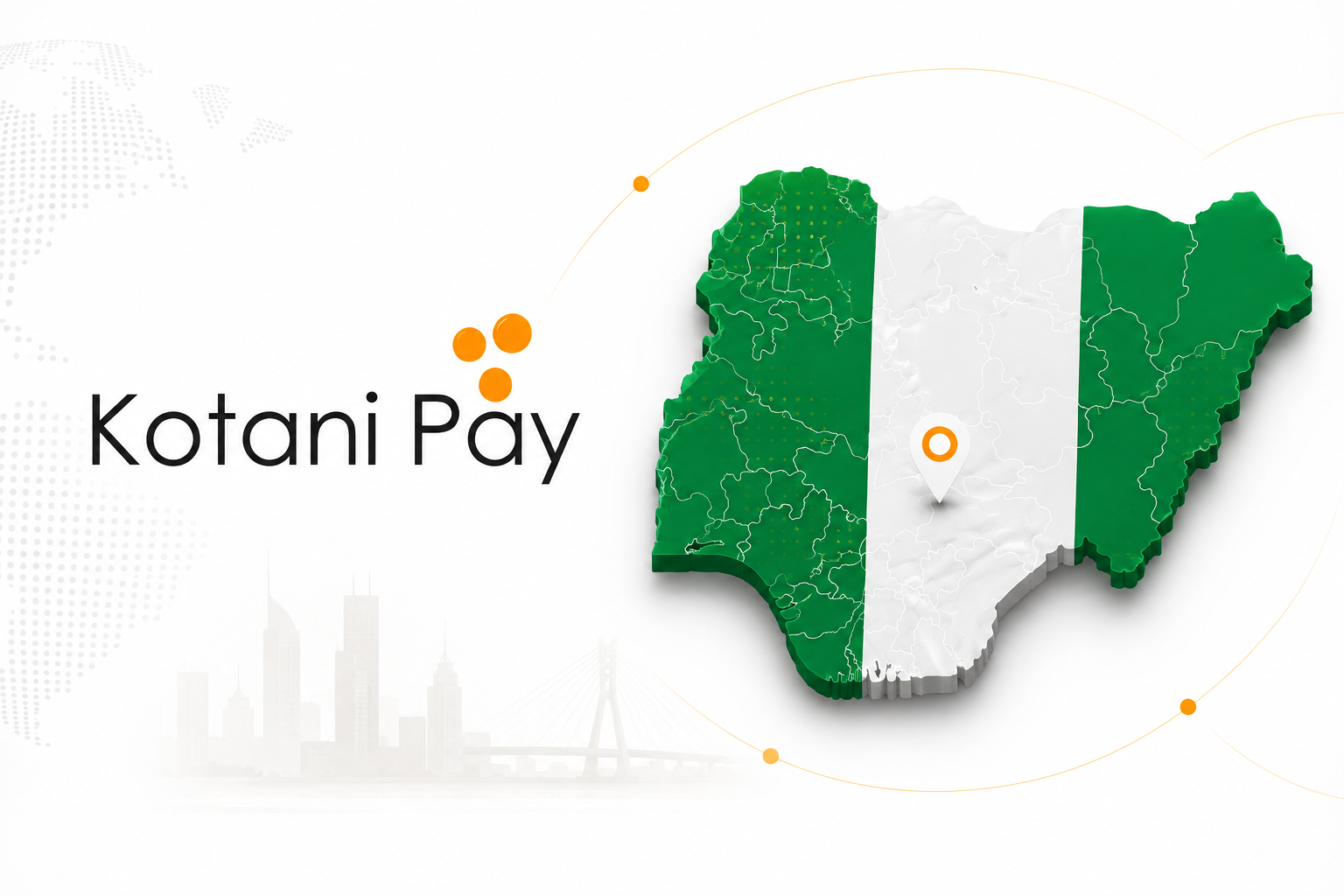
Kotani Pay has announced its expansion into Nigeria, bringing its unified payment infrastructure to Africa’s largest economy and giving businesses a simpler way to collect, send, and settle payments across one of the continent’s most important markets.
The launch enables businesses to collect payments into Nigerian bank accounts, make local payouts, generate payment links, monitor transactions through a centralized dashboard, and settle cross-border transactions using stablecoins such as USDT and USDC. Rather than integrating with multiple local providers, businesses can now access Nigeria through the same API they use across other African markets.
Nigeria is one of Africa’s largest digital payments markets and a critical destination for businesses expanding across the continent. By adding the country to its growing network, Kotani Pay is reducing the complexity of entering the Nigerian market while providing access to familiar local payment rails.
Commenting on the expansion, Kotani Pay CEO and Co-founder Felix Macharia said:
“Nigeria is one of Africa’s most important commercial hubs and a priority market for businesses expanding across the continent. This expansion provides our partners with instant entry into this vital market through one simplified integration. Scaling shouldn’t require reinventing your payment stack at every border. We are building the foundational infrastructure that allows businesses to expand across Africa with ease.”
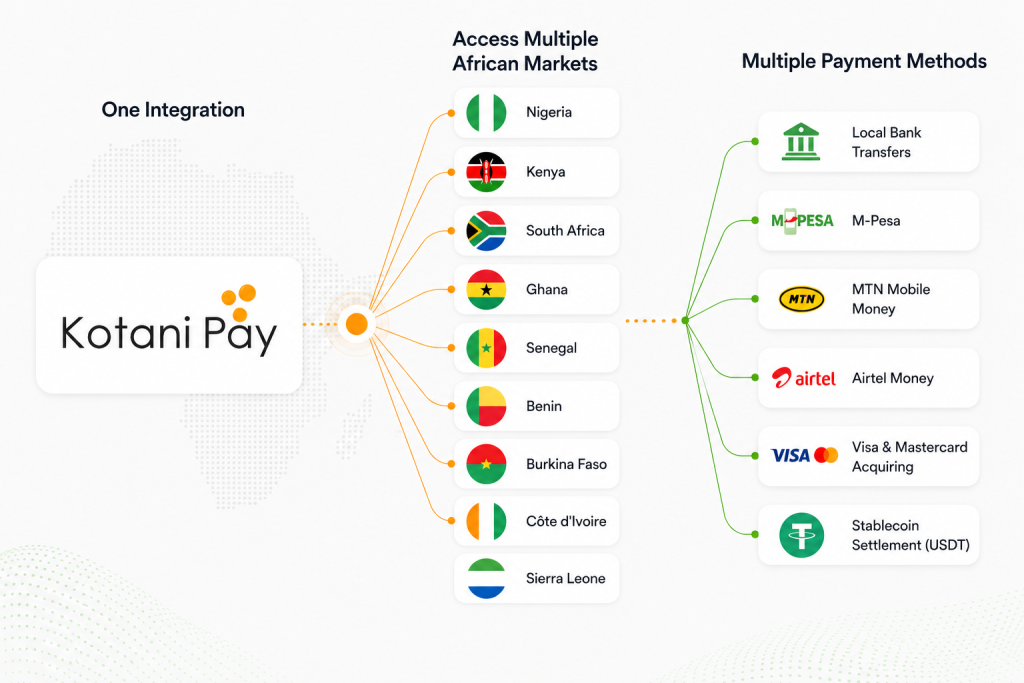
The expansion also strengthens Kotani Pay’s broader pan-African network. Businesses can now access payment infrastructure across Kenya, South Africa, Ghana, Nigeria, Senegal, Benin, Burkina Faso, Côte d’Ivoire, and Sierra Leone through a single integration. The platform supports local bank transfers, M-Pesa, MTN Mobile Money, Airtel Money, Visa and Mastercard acquiring, alongside stablecoin settlement for cross-border payments.
The announcement reflects a broader trend across Africa’s financial infrastructure. Payment providers are increasingly combining traditional banking rails with blockchain-based settlement to support faster, lower-cost cross-border commerce. As businesses continue expanding across multiple African markets, demand is growing for infrastructure that removes the need for separate payment integrations in every country.