

June 2026 may prove to be a defining moment for stablecoins. According to Visa’s Onchain Analytics, adjusted stablecoin transaction volume reached a record $1.79 trillion, up from $1.10 trillion in May, representing a 63% month-on-month increase. The figures exclude bots, exchange rebalancing and other non-economic activity, making them a stronger measure of genuine payments, settlement and liquidity activity.
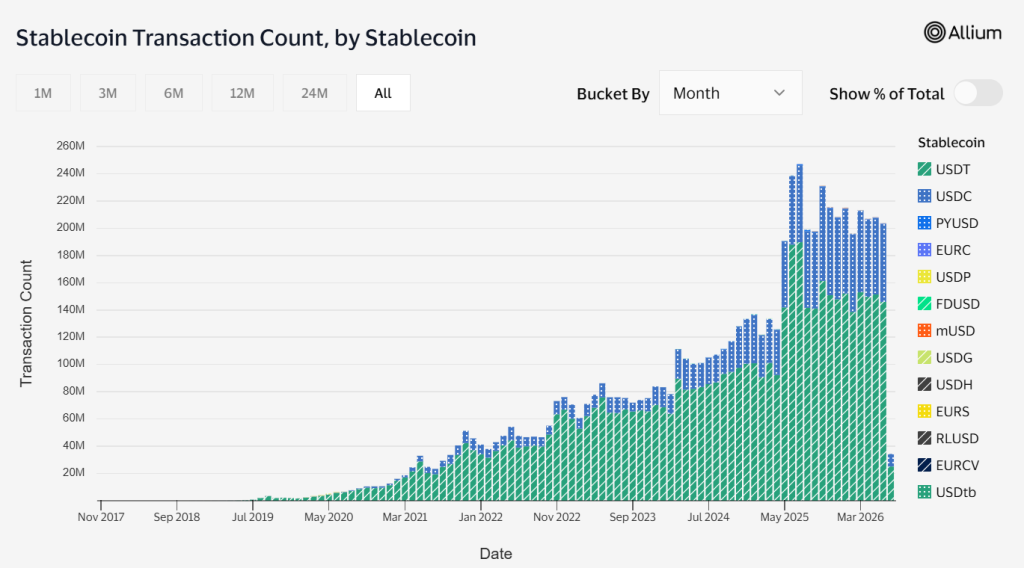
Just as notable was the scale of transaction activity. Stablecoin networks processed approximately 203.72 million transactions in June 2026. USDT accounted for 145.96 million transactions (71.6%), USDC processed 57.18 million transactions (28.1%), while all other stablecoins combined contributed just 0.58 million transactions (0.3%).
However, transaction value tells a very different story. Despite processing fewer transactions, USDC moved approximately $1.21 trillion, representing 67% of total stablecoin transaction volume, while USDT accounted for approximately $576 billion, or 32% of total volume.
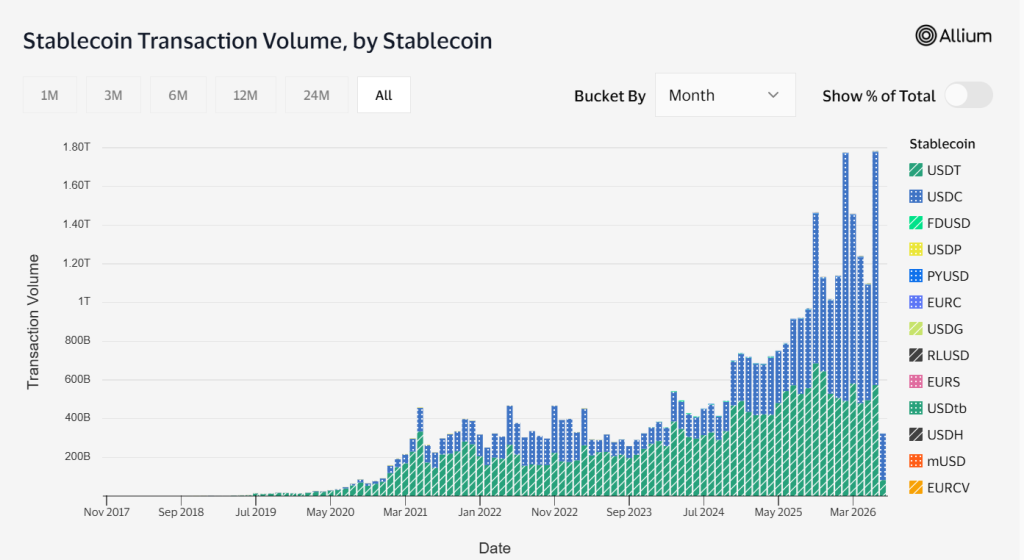
The contrast is significant. USDT remains the dominant stablecoin for retail payments, remittances and everyday value transfers, driving nearly three-quarters of all stablecoin transactions. USDC, by contrast, is increasingly the preferred vehicle for higher-value institutional activity, including treasury management, corporate settlements and liquidity operations. In other words, USDT leads in transaction frequency, while USDC leads in economic value transferred.
This trend coincides with growing institutional adoption. During the past week, Standard Chartered became the first global systemically important bank to offer institutional clients direct USDC minting and redemption capabilities, while BNY expanded its platform to support USDC custody, minting and redemption services.
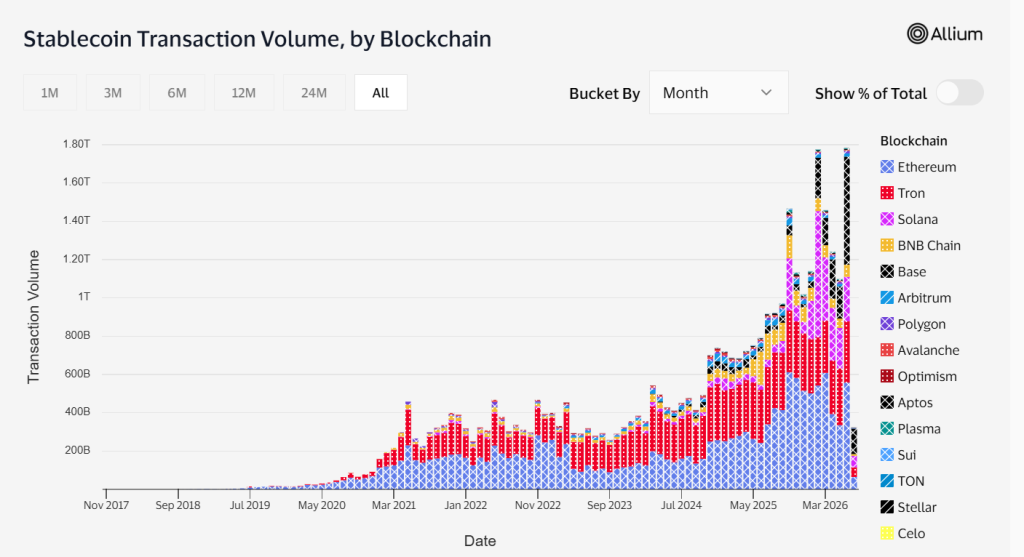
At the infrastructure layer, Base ($565 billion) and Ethereum ($562 billion) emerged as the leading stablecoin settlement networks during June, reinforcing the growing role of blockchain networks as global payment and settlement rails.
For banking, payments and fintech executives, the takeaway is clear: stablecoins are no longer merely crypto assets. They are evolving into a two-tier financial ecosystem in which USDT dominates retail activity and transaction counts, while USDC dominates institutional flows and transaction value. The June data suggests that stablecoins are rapidly transitioning from a niche digital asset class into an increasingly important component of global financial infrastructure.